
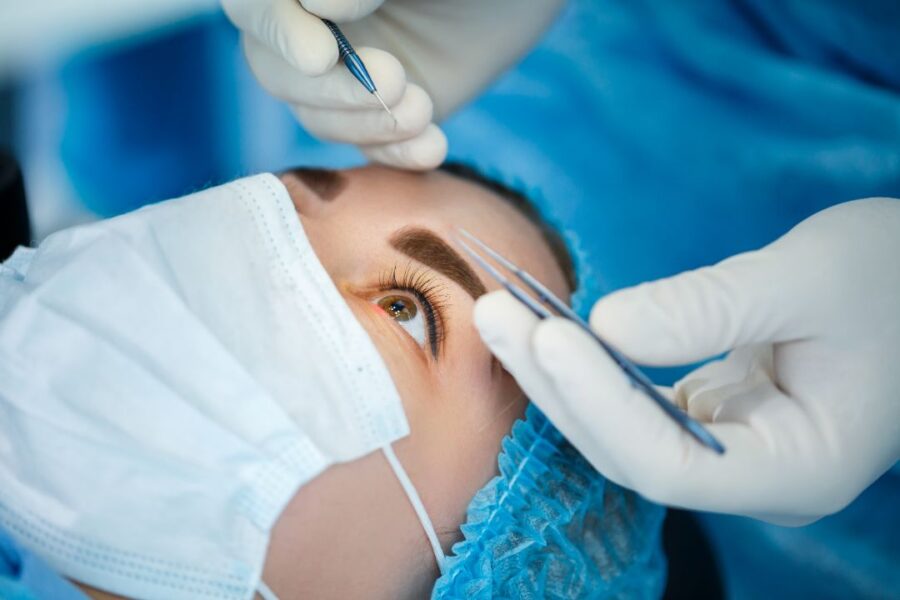
Glaucoma treatment has evolved dramatically in the last decade. If in the past the only options were daily eye drops or aggressive surgeries with long recovery times, today patients have access to something far more advanced: Minimally Invasive Glaucoma Surgeries (MIGS).
👁️ Glaucoma Guide
Understand your condition clearly.
🔬 Modern Treatments
Learn about the latest glaucoma surgeries.
🩺 Expert Insights
Trusted medical information.
⚕️ Safer Options
Discover less invasive procedures.
These procedures are transforming the way doctors manage glaucoma — offering safer techniques, shorter recovery, and long-lasting pressure reduction. If you’ve been searching for clearer, up-to-date information about these surgeries, you’re in the right place.
👁️🗨️ What Exactly Is Glaucoma and Why Does Eye Pressure Rise?
Glaucoma is a group of diseases that damage the optic nerve, most often due to high intraocular pressure (IOP). This pressure builds up when the eye’s natural fluid (aqueous humor) does not drain properly.
Without proper treatment, it can lead to gradual and irreversible vision loss.
Traditional surgeries — such as trabeculectomy and tube shunts — are effective but involve significant tissue cutting, months of healing, and higher complication risks.
That’s why MIGS has become a game-changer for doctors and patients.
🩺 What Are MIGS Procedures?
MIGS refers to a group of modern surgeries performed through tiny micro-incisions using ultra-precise instruments.
They are designed to:
✔ Improve the eye’s drainage
✔ Lower IOP safely
✔ Reduce the need for eye drops
✔ Deliver faster recovery compared to traditional surgery
Most MIGS procedures take under 30 minutes and are often done along with cataract surgery — an ideal combination for older adults who have both conditions.
🔬 How MIGS Works: The Main Techniques
Different methods are used depending on the patient’s eye anatomy and type of glaucoma:
• Trabecular Bypass Devices
(iStent, Hydrus Microstent)
Tiny stents are placed inside the trabecular meshwork to open the eye’s natural drainage channel.
• Suprachoroidal Shunts
(iStent Supra, others)
These create a new drainage pathway between the front of the eye and space behind the choroid.
• Goniotomy or Canaloplasty
These techniques open or widen existing drainage channels using microscopic tools, often without implants.
• Subconjunctival Stents
(Xen Gel Stent)
Creates a small channel that drains fluid under the conjunctiva, similar to traditional surgery but with much less trauma.
⭐ Advantages of MIGS
Patients and surgeons increasingly prefer MIGS because they offer:
-
Faster healing and less downtime
-
Lower complication rates
-
Less tissue disruption
-
Reduced dependence on glaucoma eye drops
-
Compatibility with cataract surgery
-
Effective long-term pressure control
👓 What to Expect Before, During, and After Surgery
MIGS is typically performed under local anesthesia. You remain awake but comfortable.
After surgery, mild redness or blurred vision is common for a few days.
Eye-drop medication will be prescribed to promote healing.
Most patients:
✔ Resume daily activities within a few days
✔ Notice pressure improvement within 1–2 weeks
✔ Achieve full stabilization over the following months
Consistent follow-up appointments are essential to ensure optimal results.
🧭 Who Is a Good Candidate?
MIGS is ideal for:
-
Patients with mild to moderate open-angle glaucoma
-
People struggling with multiple glaucoma eye drops
-
Those undergoing cataract surgery who also need pressure control
It may not be recommended for severe or advanced glaucoma where more aggressive pressure reduction is needed.
🌟 The Future of Glaucoma Treatment
New stents, imaging technologies, and robotic microsurgery systems are in development, promising even safer techniques and more targeted pressure control. MIGS is becoming the global standard for modern glaucoma care.
Get more informationYou will remain on the same site